Get to know: IG Sukarya, featured artist for Ubud Open Studios 2026
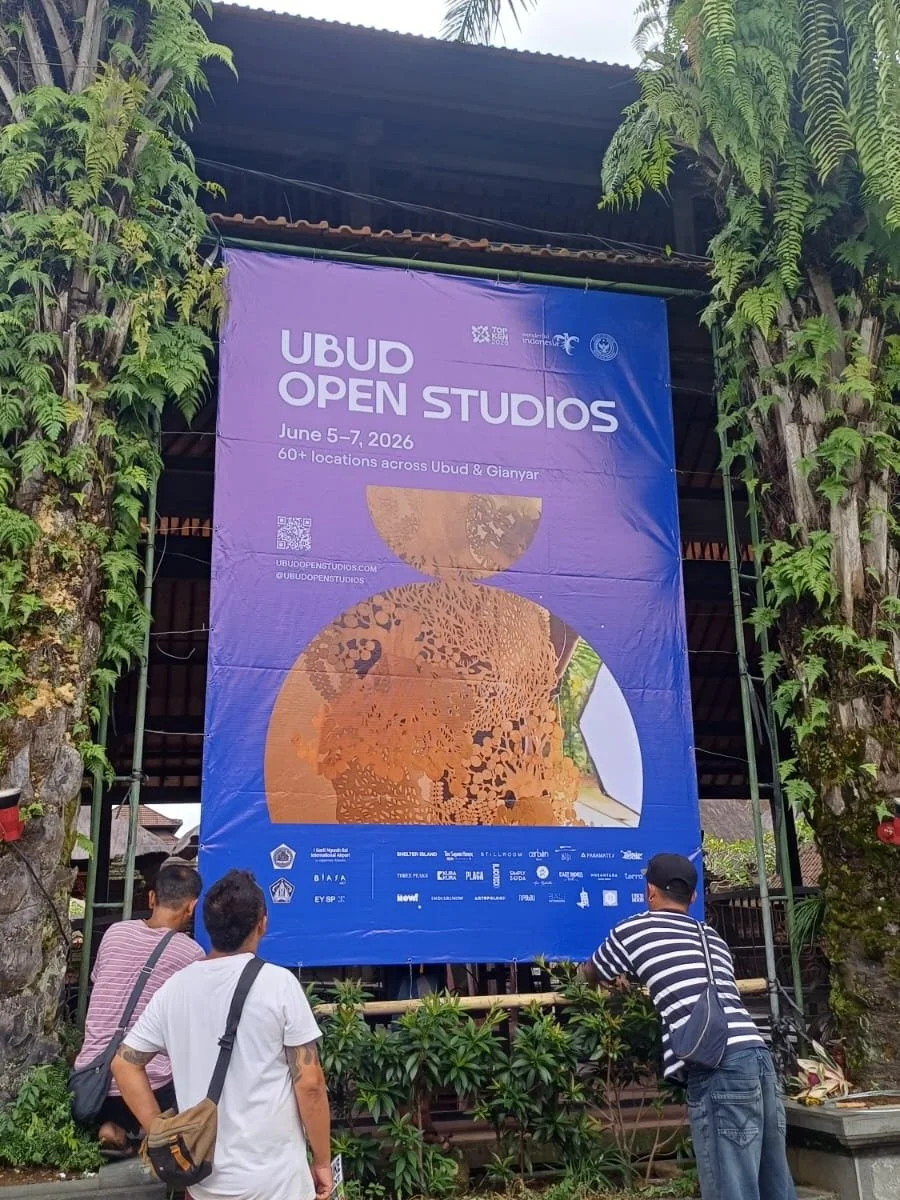
/Sit with us as we get to know I Gede Sukarya, a young Balinese artist who we are proud to be working with to create the official artwork of the 2026 Ubud Open Studios. We fell in love with Sukarya’s vision and technique of working with cut out leather to create his artworks. We also felt his work encapsulates the past and future of Balinese art and that is the essence of the UOS event.
Let me introduce myself, I'm Sukarya. I'm from Buleleng, but my studio is in Sukawati, Gianyar. I create art using cowhide as my medium, with a cutout technique called tatahan. This is the wayang kulit (shadow puppet) technique that I learned when I moved to Sukawati. Honestly, I actually learned this skill from my father-in-law, but indirectly—I learned on my own. At first, just watching, watching, watching. I became interested, then bought my own tools, bought my own leather, and carved on my own at his house.
But there were a few things I asked about, how to go faster, or how to make the chisel smooth. It's like a regeneration from the older generation to the younger one. There is one path, but I don't really delve too deeply into the traditional aspect because that's a different domain. In my area of Buleleng, there there's no such thing as cowhide craft, or using cowhide as an offering, not like in South Bali.
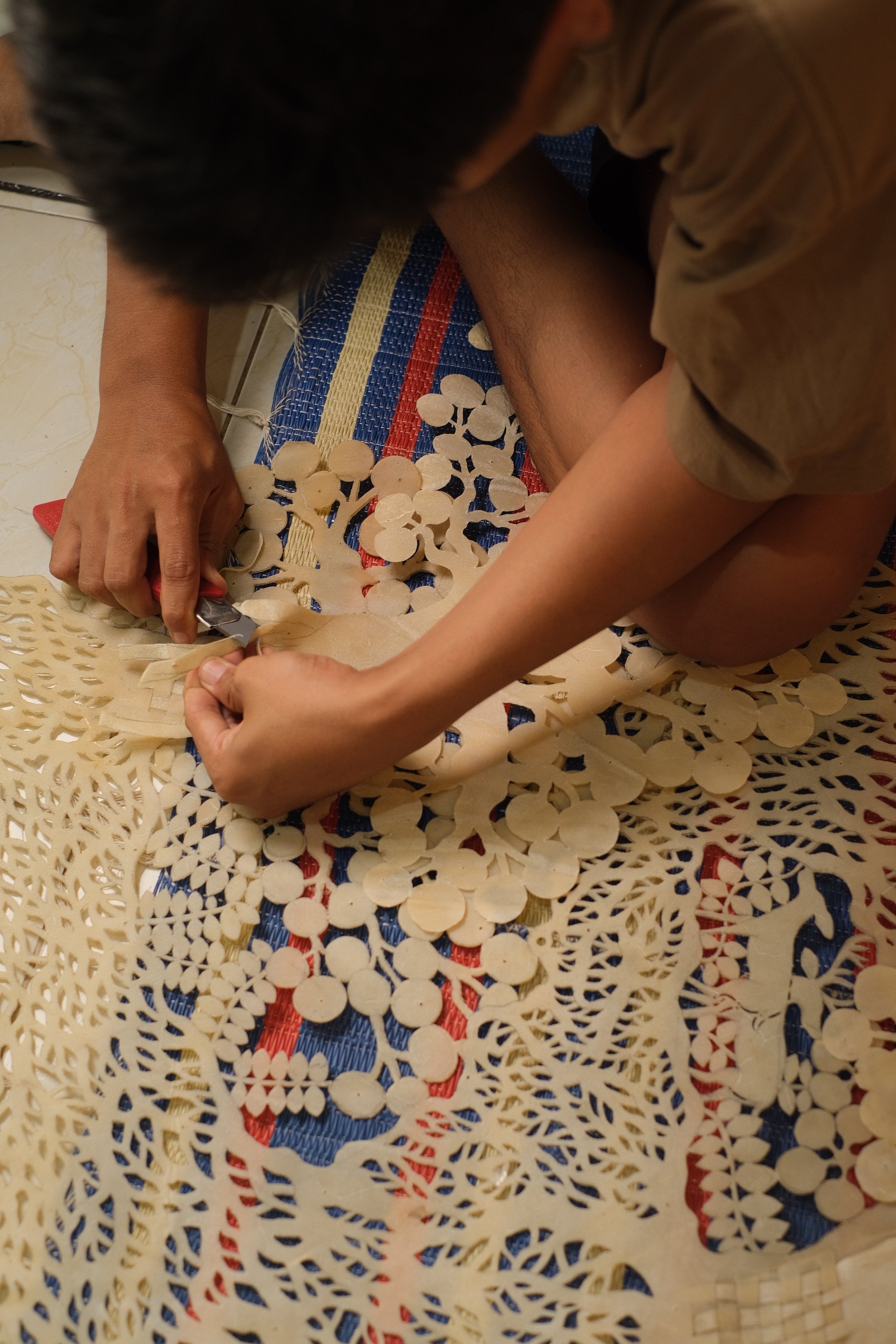
Because I made my art in South Bali, so they [the South Balinese] had already seen it often—in fact, they had better, more detailed ones than the ones I made. But the response from outsiders, people from outside Bali, was very, very positive. They felt it was new, different from the traditions in Bali. Especially since I often add several layers of leather, my work isn’t flat. I add different leather to make it appear more raised. Maybe that's what they see as different from Balinese tradition. Personally, I'm happy, and it makes me more motivated to create something different from tradition. But I acknowledge that I'm continuing a tradition.
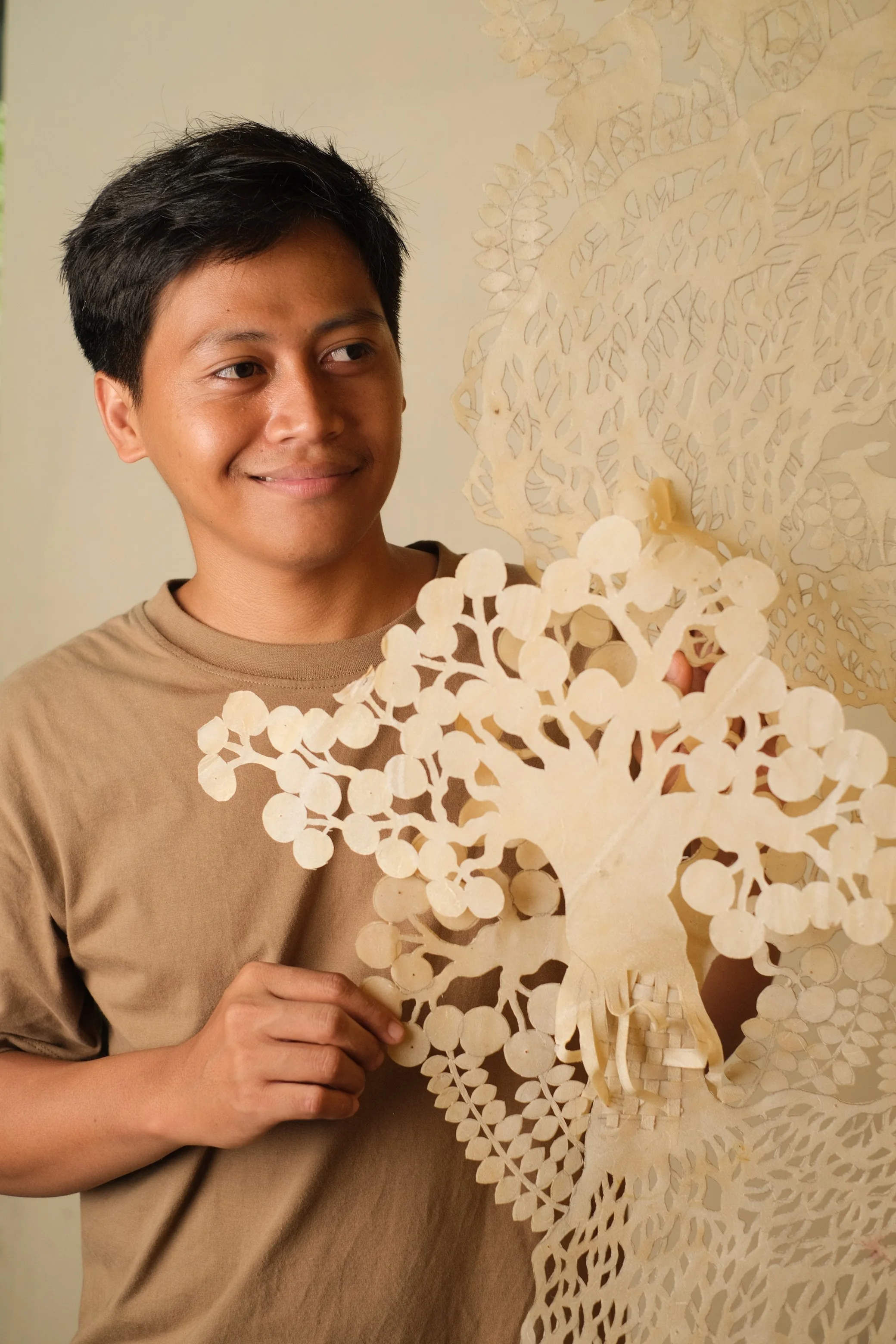
My works are mostly about culture, but there are some about nature as well. Most of it is about Balinese traditions and culture, especially in Buleleng, like the carvings and figures from the olden days. I lean more toward contemporary, because I don't use traditional technical rules. In Bali there are many rules regarding [wayang] tradition, but I prefer to combine tradition with modernity or contemporaneity itself, like incorporating media and certain issues that exist today.
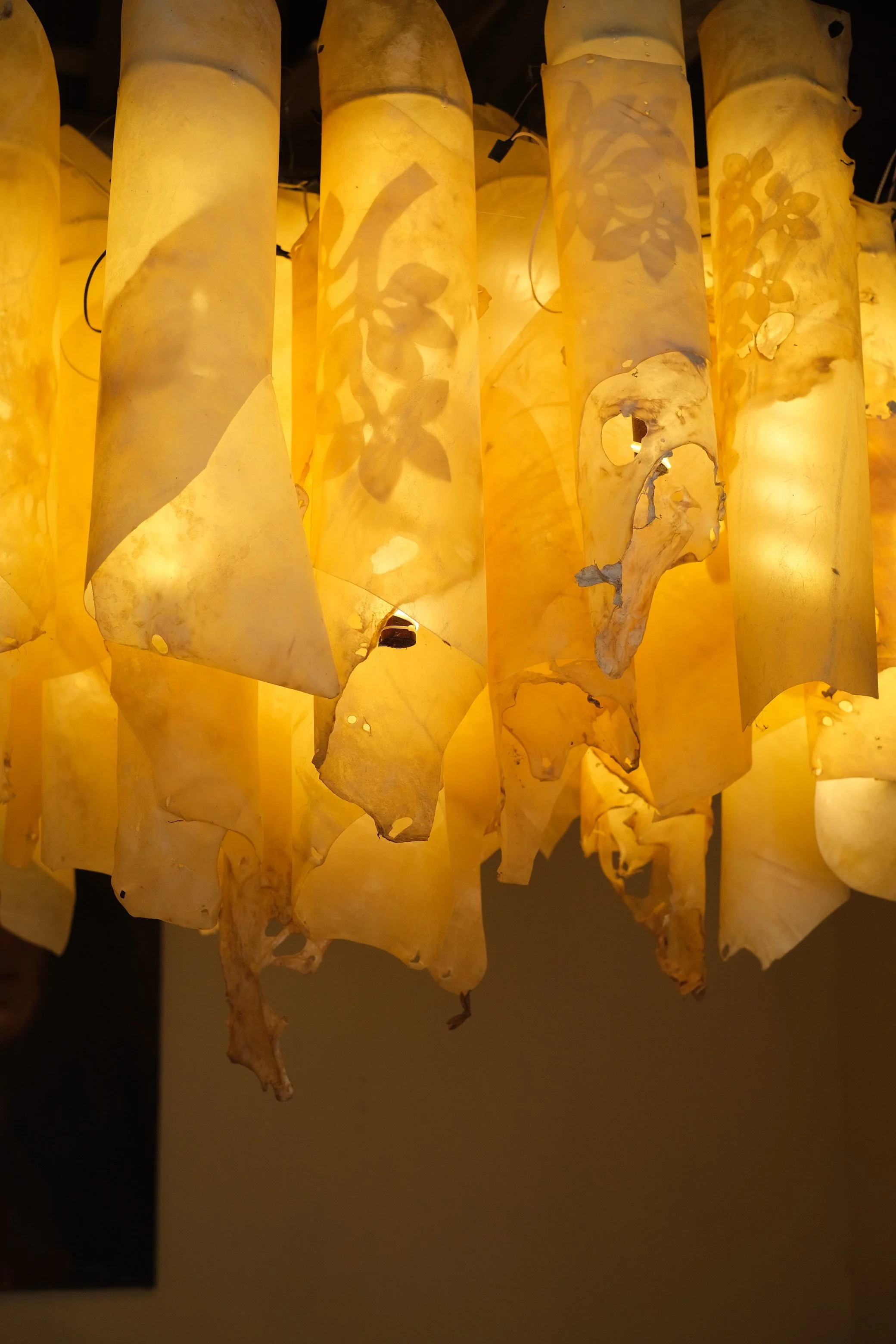
I first learned about Ubud Open Studios last year through Penawati, my wife who also participated [in 2024]. I've known about it since the very first UOS was held, but at that time, I didn't have a studio , and was still freelancing. I joined last year and now I've been selected as a featured artist. It's a source of pride for me that as a newcomer, I was immediately selected as a featured artist.
At first, I was nervous when attendees came to the studio in a group and asked questions. Honestly, even though there weren't that many at the time because my studio is still in a small space. The response from visitors was very positive. They felt it was new, to see the leather cut-out, the wayang kulit techniques. In my studio it's not just me working; there's also my father-in-law who is also a traditional leather artisan, not just making shadow puppets, but also barong decorations. The audience coming to my studio doesn't just get contemporary artwork rooted in traditional cut-work, they also learn about the tradition directly.
As for the impact of Ubud Open Studios, it seems like many people have become more familiar with artists' studios that aren't located in art centers. There are also many artists in remote areas because most artists like to be in places that are somewhat quiet. And also since Ubud Open Studios started, the audience knows more now—oh, here there's this person's studio, here there's this studio, that studio. So it's good for the artists themselves, those who have studios, and also the audience that finds it easier to discover new studios. At UOS it's not just about painting, there's also blacksmithing & knife making, even photography, printmaking, there's a lot. So it's good for the future.
All photos by Gung Una for Ubud Open Studios.